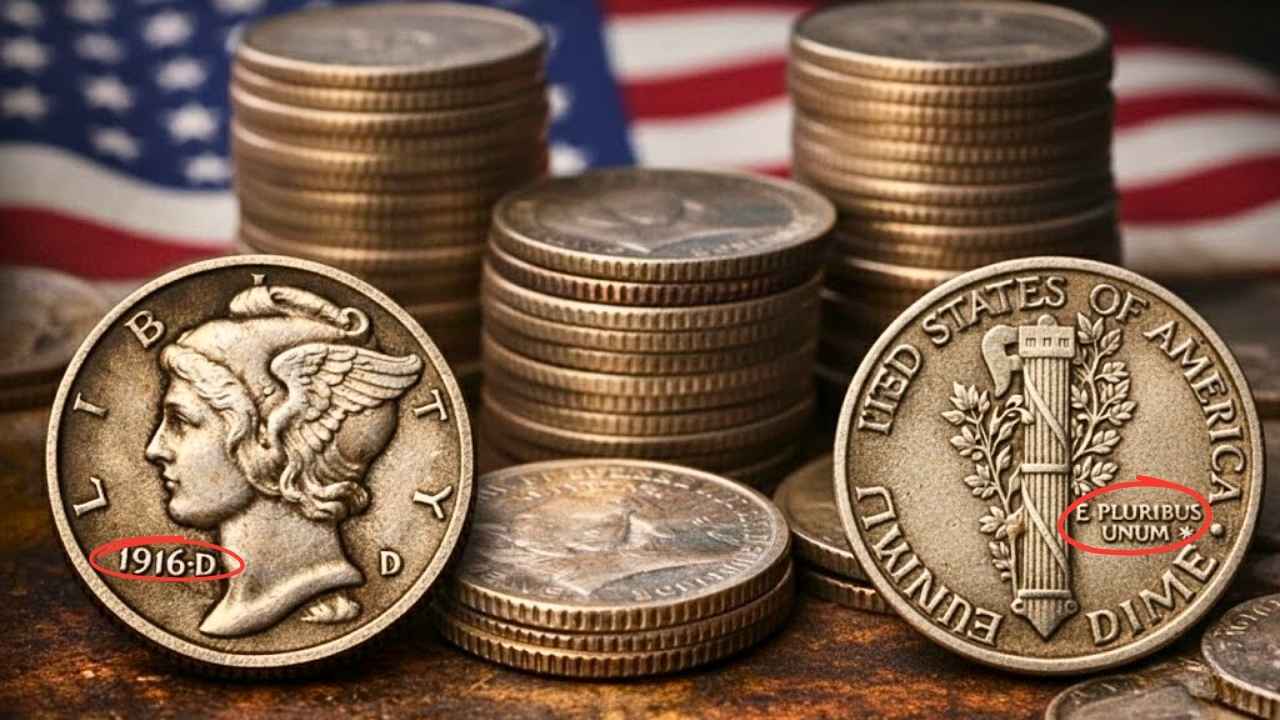
The Mercury Dime, officially known as the Winged Liberty Head Dime, is one of the most admired coins in American numismatics. Minted between 1916 and 1945, it features a design by Adolph A. Weinman that symbolizes freedom of thought and national strength. Over time, certain Mercury Dimes have become rare treasures, commanding values in the thousands and even hundreds of thousands of dollars. In 2026, collectors continue to seek out these coins, not only for their monetary worth but also for their historical and cultural significance. This guide explores rare Mercury Dimes, mint marks, error varieties, and hidden treasures that make this series so captivating.
The History of the Mercury Dime
Introduced in 1916, the Mercury Dime replaced the Barber Dime and quickly became popular for its artistry. The obverse depicts Liberty wearing a winged cap, often mistaken for the Roman god Mercury, hence the nickname. The reverse features a fasces and olive branch, representing strength and peace. These coins circulated during major events such as World War I, the Great Depression, and World War II. Production ended in 1945 when the Roosevelt Dime was introduced to honor President Franklin D. Roosevelt. Today, Mercury Dimes remain a favorite among collectors for their beauty and symbolism.
Key Rare Mercury Dimes
1916‑D Mercury Dime
The 1916‑D is the key date of the series, with only 264,000 minted in Denver. Its rarity makes it one of the most valuable Mercury Dimes, with high‑grade examples selling for tens of thousands. Collectors prize this coin for its scarcity and historical importance, making it a cornerstone of any serious collection.
1921 and 1921‑D Mercury Dimes
Both the Philadelphia and Denver issues of 1921 had low mintages due to reduced production during the post‑war period. These coins are rare in all grades, with values ranging from hundreds to thousands depending on condition. They are considered essential pieces for completing a Mercury Dime set.

1942/41 Overdate Error
One of the most famous error varieties is the 1942/41 overdate, created when a 1941 die was mistakenly overpunched with 1942. The doubling in the date is visible to the naked eye, making it easy to identify. Both Philadelphia and Denver versions exist, and high‑grade examples can sell for tens of thousands. This error is among the most dramatic and valuable in U.S. coinage.
Proof Mercury Dimes
Proof Mercury Dimes were struck in limited numbers between 1936 and 1942. These coins feature mirror‑like surfaces and sharp details. Because of their low mintages, proof examples are rare and highly valuable, with pristine specimens selling for thousands. They represent the finest artistry of the series.

Mint Marks and Their Importance
Mint marks play a crucial role in identifying rare Mercury Dimes. Coins were struck at three mints: Philadelphia (no mint mark), Denver (D), and San Francisco (S). The location of the mint mark is on the reverse, near the bottom left of the fasces. Collectors pay close attention to mint marks, as they often determine rarity and value. For example, the 1916‑D is far rarer than its Philadelphia counterpart, while the 1921‑D is scarcer than the 1921 from Philadelphia. Understanding mint marks is essential for evaluating Mercury Dimes.
Hidden Treasures in the Series
Beyond the well‑known rarities, Mercury Dimes hold hidden treasures that can surprise collectors. Full Bands varieties, where the horizontal bands on the reverse fasces are fully struck, command significant premiums. Error coins such as off‑center strikes, double dies, and clipped planchets add unique value. Even common dates in pristine condition can be worth far more than face value. Collectors who carefully examine their coins may uncover hidden gems that elevate their collections.
Market Trends in 2026
The market for Mercury Dimes remains strong in 2026, with demand driven by both collectors and investors. Rare dates and error varieties continue to set records at auctions, while common silver dimes maintain steady value due to their metal content. High‑grade coins and certified examples command the highest premiums. As silver prices fluctuate, interest in pre‑1945 coins remains high. Overall, Mercury Dimes offer both historical charm and investment potential.
Collectors Tips and Strategies
Learn the Key Dates
Understanding which dates and mintmarks are rare is essential. The 1916‑D, 1921, and 1942/41 overdate are among the most important. Building a complete set requires patience and knowledge of these rarities.

Focus on Condition
Condition plays a critical role in value. Coins graded Mint State with sharp details and full bands are worth far more than circulated examples. Avoid cleaning coins, as this can reduce their value significantly.
Buy from Reputable Sources
Authenticity is crucial. Always purchase from trusted dealers, auction houses, or certified coin shows. Counterfeits exist, especially for rare dates, so certification from professional grading services provides peace of mind.

Diversify Your Collection
Consider collecting a mix of common dates, rare varieties, and error coins. This approach balances affordability with long‑term investment potential. Proof coins and full band varieties add depth to any collection.
Preserve and Protect
Proper storage is essential to maintain value. Use protective holders or albums to prevent damage. Store coins in a cool, dry environment to avoid tarnish or corrosion.

The Cultural Significance of Mercury Dimes
Beyond monetary value, Mercury Dimes hold cultural importance. Their design reflects ideals of freedom, strength, and peace during a turbulent era in American history. Collectors admire them not only as financial assets but also as pieces of art and heritage. Owning a Mercury Dime is like holding a fragment of America’s past, connecting generations through shared history.
Key Highlights
- The Mercury Dime was minted from 1916 to 1945 and designed by Adolph A. Weinman.
- Rare varieties such as the 1916‑D, 1921, and 1942/41 overdate are worth thousands.
- Proof Mercury Dimes and Full Bands varieties command significant premiums.
- Mint marks play a crucial role in determining rarity and value.
- Error coins and hidden treasures add excitement to collecting.
- Collectors should focus on condition, authenticity, and proper preservation.
Final Words
The Rare Mercury Dime Value Guide 2026 highlights coins that are more than just currency; they are treasures of history, artistry, and culture. Each coin tells a story, from low mintages to dramatic errors and design changes. For collectors, Mercury Dimes represent the pinnacle of numismatics, combining rarity, beauty, and value. Whether admired in museums or pursued at auctions, they continue to inspire fascination and remind us that extraordinary worth can be hidden in the smallest pieces of metal.