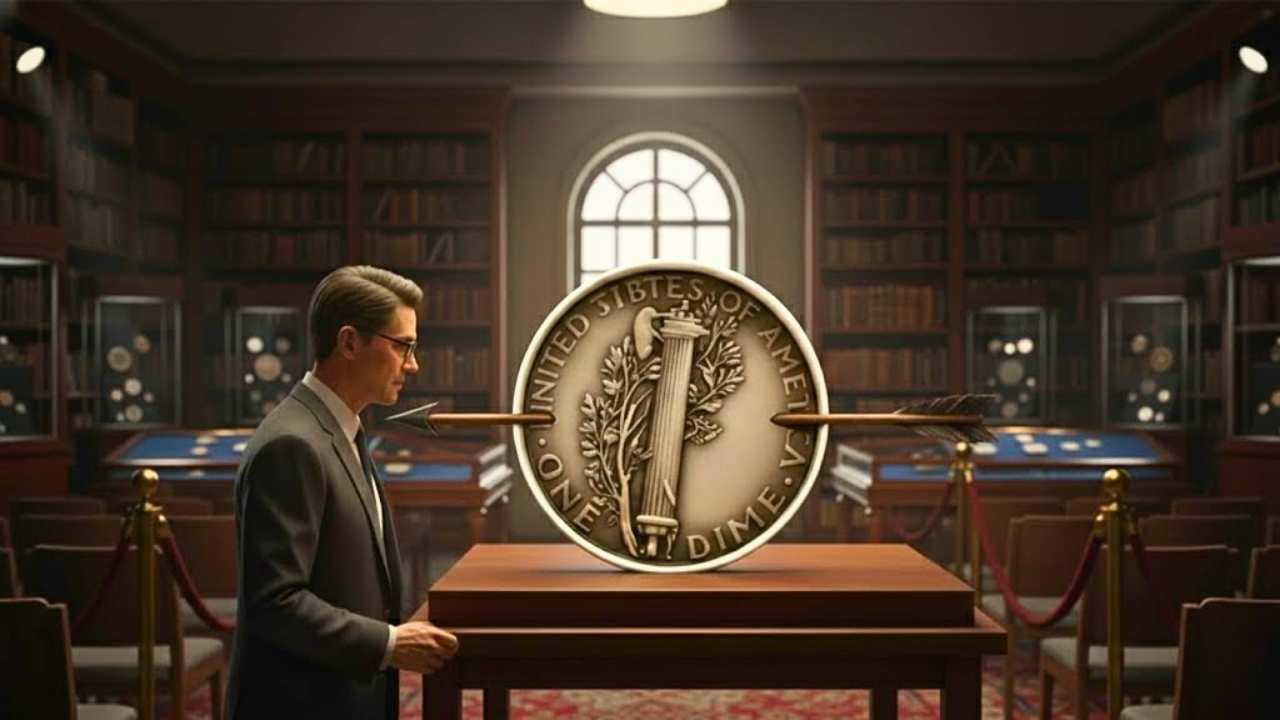
The Mercury Dime, minted from 1916 to 1945, is one of the most iconic coins in American numismatics. Designed by Adolph A. Weinman, the coin features Liberty wearing a winged cap, symbolizing freedom of thought. Collectors have long admired its artistry, but beyond its beauty, certain rare varieties and error coins have reached astonishing values. In fact, some Mercury Dimes have sold for as much as $1.1 million, making them legendary treasures in the coin collecting world. This guide explores the history, value, and rare errors that make the Mercury Dime a centerpiece for collectors in 2026.
The History of the Mercury Dime
Introduced in 1916, the Mercury Dime replaced the Barber Dime and quickly became popular for its elegant design. The obverse shows Liberty with wings on her cap, often mistaken for the Roman god Mercury, hence the nickname. The reverse features a fasces, symbolizing strength and unity, alongside an olive branch representing peace. Struck in 90 percent silver, the coin circulated widely until 1945, when it was replaced by the Roosevelt Dime.
Why Mercury Dimes Are Valuable
The value of Mercury Dimes depends on several factors:
- Year of issue and mintage numbers
- Mint marks from Denver, San Francisco, or Philadelphia
- Condition and grading
- Rare errors and varieties
While common dates may only be worth a few dollars, rare issues and error coins can command thousands or even millions. Collectors prize these coins not only for their rarity but also for their historical significance and artistic design.

Rare Mercury Dimes Worth Collecting
1916‑D Mercury Dime
The Denver Mint produced only 264,000 dimes in 1916, making this one of the rarest issues. In high grades, it can be worth tens of thousands of dollars.
1921 Mercury Dime
Both the Philadelphia and Denver Mints produced low numbers in 1921, making these coins scarce. High‑grade examples are highly sought after.

1942/41 Overdate Error
One of the most famous Mercury Dime errors, the 1942/41 overdate occurred when dies from 1941 were mistakenly used in 1942. This error is extremely rare and valuable, with pristine examples selling for hundreds of thousands.
1931‑S Mercury Dime
With a low mintage of just over 1.8 million, this coin is rare in mint condition and commands strong premiums.

1945 Mercury Dime in High Grade
The final year of issue, 1945 dimes in Mint State 67 or higher are rare and valuable, especially those with full split bands on the reverse.
The $1.1 Million Mercury Dime
The most famous Mercury Dime sale involved a 1916‑D in exceptional condition, which sold for $1.1 million at auction. Its rarity, combined with flawless preservation and professional certification, made it one of the most valuable dimes ever sold. This record highlights the importance of condition and rarity in determining coin values.
Condition and Grading
Coins are graded on a scale from Poor to Mint State 70. Mercury Dimes with sharp details, full split bands, and original luster are worth far more than worn examples. Professional grading services such as PCGS and NGC provide authentication and grading, ensuring collectors know exactly what they are buying. High‑grade coins often multiply in value compared to lower‑grade examples.
Market Value in 2026
As of 2026, Mercury Dimes remain popular among collectors worldwide. Online auctions, coin shows, and marketplaces have made rare varieties more accessible, but demand continues to drive prices higher. The combination of artistry, history, and rarity ensures that Mercury Dimes remain a cornerstone of numismatic collections.
Investment Potential
Rare Mercury Dimes are not only collectibles but also alternative investments. Their value is driven by scarcity, demand, and historical significance. Investors should focus on certified coins with high grades, as these are more likely to appreciate over time. While not every Mercury Dime will yield high returns, rare varieties like the 1916‑D and 1942/41 overdate offer both historical charm and financial potential.
Collecting Tips
For those interested in collecting Mercury Dimes, start by examining coins in circulation or purchasing affordable examples from dealers. Look for unusual features such as overdates, doubling, or full split bands. Always handle coins carefully to avoid damage, and consider professional grading for coins that appear rare or flawless. Joining coin clubs or online forums can also provide valuable insights and connections with other collectors.

Key Highlights
- The Mercury Dime was minted from 1916 to 1945 and designed by Adolph A. Weinman.
- Rare issues include the 1916‑D, 1921, and 1931‑S dimes.
- Famous errors like the 1942/41 overdate are extremely valuable.
- A 1916‑D Mercury Dime sold for $1.1 million, setting a record.
- Condition and professional grading are essential for determining value.
- Collecting in 2026 is more global, with online auctions driving demand.
Final Words
The Mercury Dime remains one of the most beloved coins in American history. Its elegant design, historical significance, and rare varieties make it a favorite among collectors. The record‑breaking $1.1 million sale of a 1916‑D Mercury Dime demonstrates the extraordinary potential of rare coins. For collectors in 2026, these dimes offer both a connection to the past and a pathway to potential financial gain. Whether you are a beginner searching through affordable examples or an experienced investor seeking rare treasures, the Mercury Dime continues to shine as a timeless symbol of numismatic artistry and value.