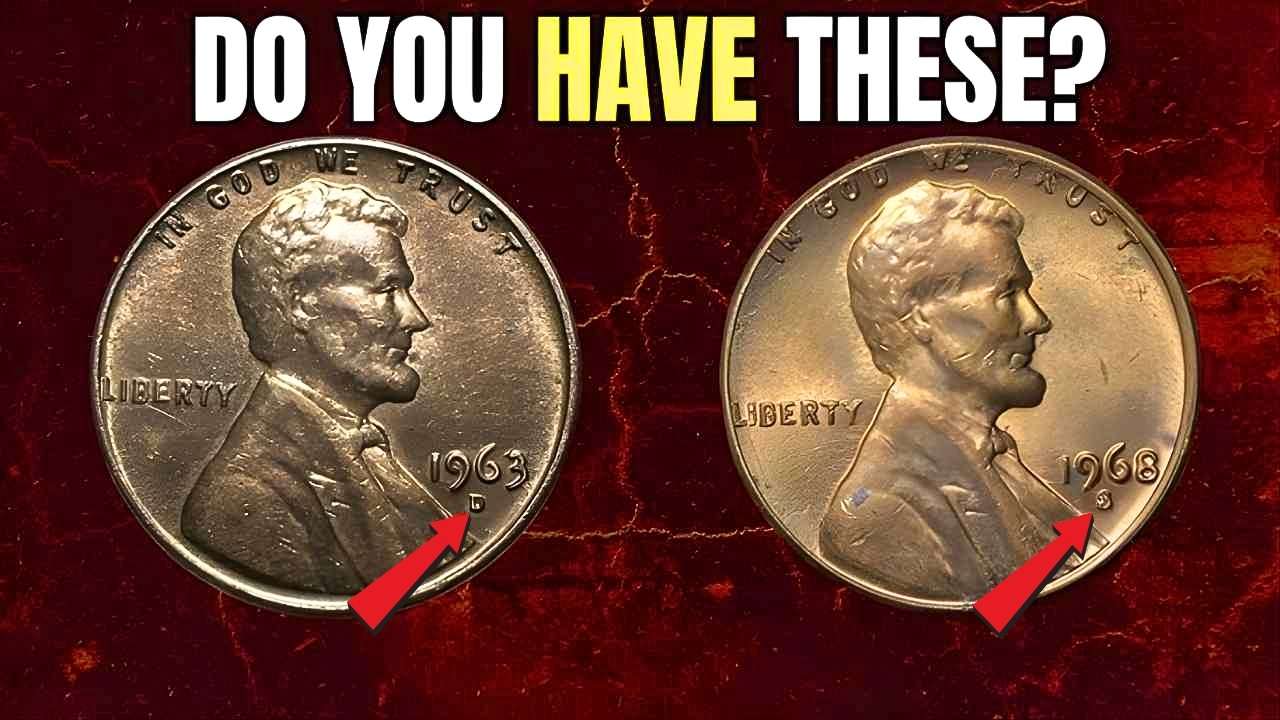
The Lincoln penny is one of the most iconic coins in American history. First introduced in 1909 to honor the centennial of Abraham Lincoln’s birth, it became the first U.S. coin to feature a real person rather than a symbolic figure. Over the years, the Lincoln penny has undergone design changes, minting variations, and has produced rare issues that are now highly valuable. For collectors, understanding the year and mint mark is essential to determining a coin’s worth. This guide explores the history, value chart, and mint details every coin collector should know.
The Origins of the Lincoln Penny
The Lincoln penny was designed by Victor David Brenner and released in 1909. Its obverse features a portrait of Abraham Lincoln, while the reverse originally displayed two wheat stalks, symbolizing prosperity. This design, known as the Wheat penny, remained until 1958. In 1959, the reverse was changed to feature the Lincoln Memorial, and in 2010, it was updated again to show the Union Shield.
Importance of Mint Marks
Mint marks indicate where a coin was produced. For Lincoln pennies, the most common mint marks are:
- No mint mark: Philadelphia Mint
- D: Denver Mint
- S: San Francisco Mint
Mint marks play a crucial role in determining value. Coins from certain mints, especially those with low production numbers, are often more valuable.
Rare and Valuable Lincoln Pennies
Some Lincoln pennies are worth far more than their face value due to rarity, errors, or historical significance. Notable examples include:
- 1909-S VDB: One of the most famous and valuable Wheat pennies.
- 1914-D: Scarce issue from the Denver Mint.
- 1922 No D: Error coin missing the Denver mint mark.
- 1955 Double Die: Famous error coin showing doubling in the date and lettering.
- 1969-S Double Die: Rare error highly prized by collectors.
Lincoln Penny Value Chart Overview
While most Lincoln pennies are worth only a few cents, rare dates and mint marks can command significant premiums. A simplified overview includes:
- Common Wheat pennies (1909–1958): Typically worth 5 to 20 cents in circulated condition.
- Key dates and rare varieties: Worth hundreds to thousands depending on grade.
- Memorial pennies (1959–2008): Generally face value unless rare errors are present.
- Shield pennies (2010–present): Mostly face value, though error coins can be valuable.
Factors That Influence Value
Several factors determine the value of Lincoln pennies:
- Rarity: Low mintage numbers or minting errors increase value.
- Condition: Uncirculated coins are worth far more than worn examples.
- Mint mark: Coins from Denver and San Francisco often carry higher premiums.
- Collector demand: Popular varieties remain in high demand.
How to Read the Value Chart
Collectors should examine the year, mint mark, and condition of their coins. For example, a 1914-D penny in good condition may be worth hundreds, while the same coin in mint state can be worth thousands. Similarly, a 1955 Double Die penny in circulated condition may sell for several hundred dollars, but in uncirculated grade, it can reach thousands.
Tips for Collectors
- Always check the date and mint mark carefully.
- Look for unusual features such as doubling or missing marks.
- Store coins properly to preserve condition.
- Consider professional grading for rare varieties.
- Stay informed about auction results and collector trends.
The Joy of Collecting Lincoln Pennies
Beyond financial value, Lincoln pennies offer a connection to history. Each coin represents a piece of America’s past, from the early 20th century through modern times. For many collectors, the thrill lies not only in profit but in the discovery of hidden treasures that others overlook.
Key Highlights
- Lincoln pennies were first minted in 1909 to honor Abraham Lincoln.
- Mint marks indicate where coins were produced and influence value.
- Rare varieties include the 1909-S VDB, 1914-D, 1922 No D, and 1955 Double Die.
- Most Lincoln pennies are worth only a few cents, but rare issues can be worth thousands.
- Value depends on rarity, condition, mint mark, and collector demand.
Final Words
The Lincoln penny remains one of the most iconic and collectible coins in American history. Its values have grown steadily over time, transforming ordinary cents into treasures worth hundreds or thousands. For collectors, the pursuit of Lincoln pennies is not just about wealth but about preserving history and enjoying the thrill of discovery.
Whether found in circulation, inherited from family, or purchased at auction, Lincoln pennies continue to inspire collectors with their unique blend of artistry, rarity, and heritage. As values rise and demand remains strong, these coins will always hold a special place in the world of numismatics.