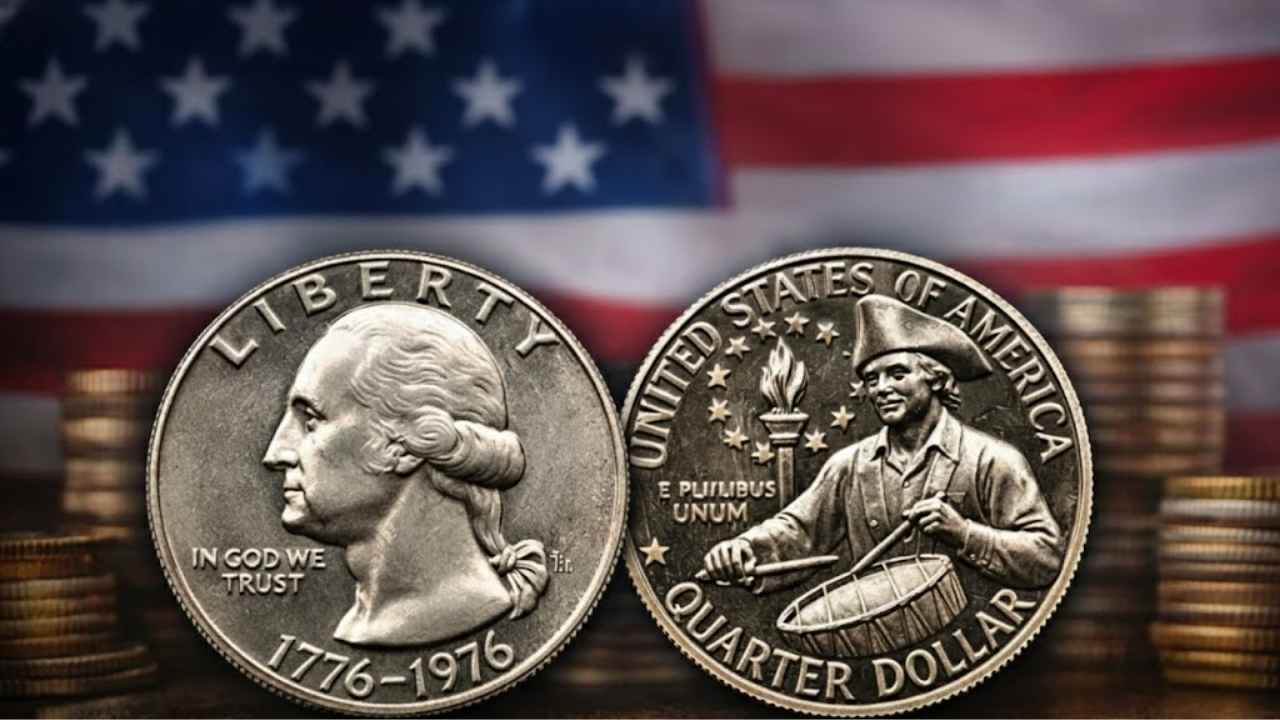
The 1976 Bicentennial Quarter, popularly known as the Drummer Boy Quarter, is one of the most iconic coins in American history. Issued to celebrate the 200th anniversary of the United States, it features a colonial drummer on the reverse and the dual date “1776–1976” on the obverse. While most of these coins are common and worth only face value, certain rare error varieties have become legendary among collectors. Some examples have sold for astonishing amounts, with one rare specimen valued at $550,000. This guide explores the history of the Drummer Boy Quarter, the rare errors that make it so valuable, and how collectors can identify these treasures.
The Bicentennial Celebration and Coin Design
In 1976, the U.S. Mint released special designs for the quarter, half dollar, and dollar to commemorate the nation’s bicentennial. The quarter’s reverse, designed by Jack L. Ahr, depicts a colonial drummer with a victory torch surrounded by thirteen stars. This patriotic design quickly became a favorite among collectors and the general public. Millions of these coins were struck, both in circulation strikes and special collector editions, making them widely available. However, hidden among the masses are rare varieties that command extraordinary premiums.
Why the Drummer Boy Quarter Became Famous
The Bicentennial Quarter is not rare in itself, but its fame comes from the unique errors and varieties that slipped through the minting process. These coins became viral in numismatic circles because of their rarity, historical significance, and the staggering prices they achieved at auctions. The idea that a coin worth 25 cents could be valued at hundreds of thousands of dollars has captured the imagination of collectors and casual spenders alike.
Rare Error Varieties Worth Big Money
Double Die Obverse
One of the most sought-after errors is the double die obverse. This variety shows noticeable doubling in the date “1776–1976” and the inscriptions. The doubling is visible to the naked eye, making it easier to identify. High-grade examples of this error have sold for tens of thousands of dollars, and unique specimens have reached values close to half a million.

Off-Center Strikes
Another rare error involves off-center strikes, where the design is not properly aligned on the coin. Depending on the degree of misalignment, these coins can be highly valuable. Collectors especially prize examples where the date and key design elements are still visible. Severe off-center strikes in mint condition can command prices in the thousands.
Clipped Planchets
Clipped planchet errors occur when a portion of the coin’s blank is missing before striking. These coins have a distinctive curved clip, making them easy to spot. While minor clips may only add modest value, dramatic examples combined with the Bicentennial design can be worth significant amounts.
Wrong Planchet Errors
One of the rarest and most valuable errors is when a Bicentennial Quarter is struck on the wrong planchet. For example, some coins were mistakenly struck on dime or foreign coin blanks. These errors are extremely rare and highly prized, with values reaching hundreds of thousands of dollars depending on condition and uniqueness.
Proof Errors
Proof coins were specially struck for collectors, featuring sharp details and mirror-like surfaces. Occasionally, proof Bicentennial Quarters exhibit striking errors such as double strikes or missing elements. These proof errors are rare and can be worth substantial amounts, especially in pristine condition.

Identification Guide for Collectors
Identifying rare Bicentennial Quarter errors requires careful examination. Collectors should look for doubling in the date and lettering, misaligned designs, missing portions of the coin, or unusual weight and size that may indicate a wrong planchet. Using a magnifying glass or coin loupe can help spot subtle details. Professional grading services can authenticate and certify these coins, providing assurance of their rarity and value. Collectors are advised to handle coins carefully and avoid cleaning them, as condition plays a critical role in determining value.
Market Value and Auction Records
The market for rare Bicentennial Quarters has grown steadily, with record-breaking auction prices making headlines. While most examples are worth only face value, rare error varieties in high grades can sell for thousands or even hundreds of thousands. The most famous specimen, a rare error quarter valued at $550,000, demonstrates the extraordinary potential of these coins. Auction houses and numismatic events continue to showcase these treasures, fueling interest among collectors worldwide.
Collecting Tips for Enthusiasts
For those inspired to search for rare Bicentennial Quarters, patience and knowledge are essential. Checking pocket change and coin rolls can occasionally yield surprises, though most valuable examples are found through dealers and auctions. Building relationships with reputable coin dealers and staying informed about numismatic trends can increase the chances of acquiring rare varieties. Collectors should also consider investing in proper storage and preservation methods to protect their coins for the long term.
Key Highlights
- The 1976 Bicentennial Quarter, known as the Drummer Boy Quarter, was issued to celebrate America’s 200th anniversary.
- Rare error varieties such as double die obverse, off-center strikes, clipped planchets, wrong planchet errors, and proof errors can be worth thousands or even hundreds of thousands.
- The most famous specimen has been valued at $550,000, making it one of the most valuable quarters in U.S. history.
- Identifying rare errors requires careful examination and often professional grading.
- Collectors should focus on authenticity, condition, and reputable sources when acquiring rare coins.
Final Words
The 1976 Drummer Boy Bicentennial Quarter is more than just a piece of pocket change; it is a symbol of American history and a reminder that extraordinary treasures can be hidden in ordinary places. While most examples are common, rare error varieties have achieved legendary status, with values reaching hundreds of thousands of dollars. For collectors, the thrill lies not only in the potential financial reward but also in the joy of discovering a piece of history. As interest in numismatics continues to grow, the Bicentennial Quarter remains a shining example of how a simple coin can capture the imagination and inspire generations of collectors.